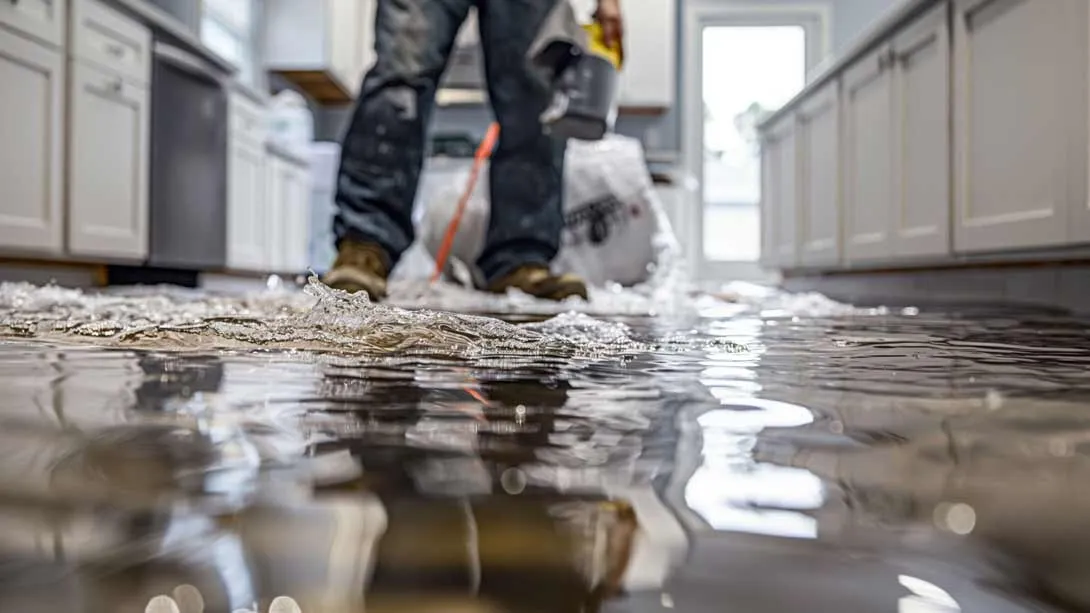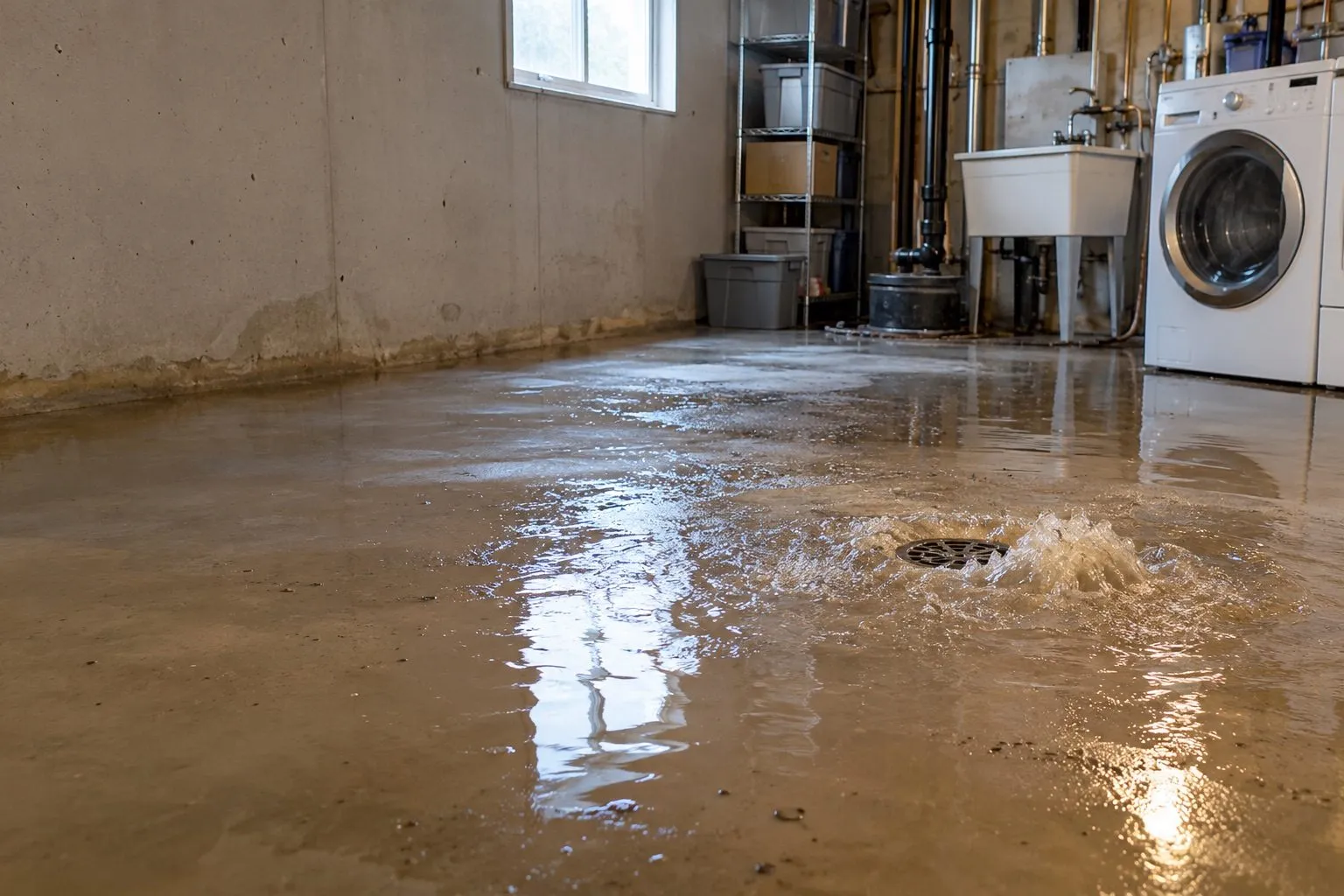
A sewer backup is one of the worst things that can happen to a basement. Dirty water comes up through floor drains, toilets or showers, and it carries bacteria and viruses that can make people sick. Here is what to do in the first hours, who to call and when cleanup is too risky to do yourself.
Step 1: Keep everyone away from the water
Sewage can carry bacteria and viruses. Keep children and pets out of the basement, do not touch the water with bare hands and do not try to wade through it. If the water is near outlets, appliances or the electrical panel, do not go in — turn off the power only if you can reach the breaker from a dry spot.
Step 2: Stop using water in the house
Do not flush toilets, run the dishwasher or washing machine, or use any sink or shower until the cause is fixed. Every litre that goes down the drain can come back up in the basement.
Step 3: Find out where the blockage is
The pipe that runs from your house to the city sewer, called the sewer lateral, is usually the homeowner’s responsibility up to the property line. If the problem is in the city main, the municipality handles it. In Mississauga, call Peel Region at 905-791-7800 for emergency help with a sewer backup; in other GTA cities, call 311. A licensed plumber can camera-inspect your line to find the cause.
Step 4: Document and call your insurer
Take photos and video of the water, the drains and every damaged item before anything is moved or thrown out. Keep receipts for emergency work. Then call your insurer: sewer backup damage is only covered if you added optional sewer backup coverage to your home policy.
Why sewage cleanup is not a DIY job
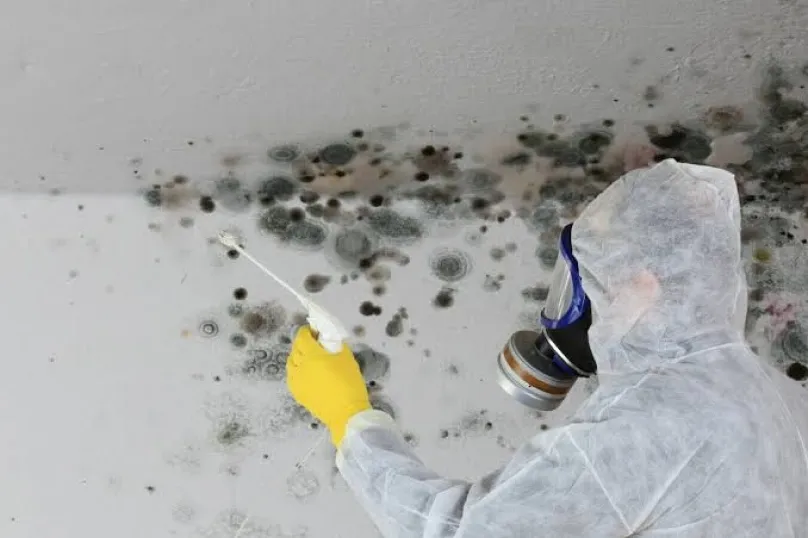
Water from a sewer is the most contaminated kind of water damage. Drywall, insulation, carpet and anything porous it touched usually has to be removed, and every surface must be cleaned and disinfected before drying starts. Professionals work in protective gear, contain the area so contamination does not spread through the house, and document everything for your insurer.
How to prevent the next backup
Ask a plumber about a backwater valve — it lets wastewater leave the house but closes when the sewer pushes back. Keep grease and wipes out of the drains, and check your policy for sewer backup coverage before the next heavy storm.
Sewage in your basement? Call us now.
Our crews are on call 24/7 across the GTA. We remove contaminated materials, disinfect, dry and document everything for your insurer.
416-540-0755